Solar Company in Karachi: How to Pick the Right One
Karachi’s heat, humidity and unpredictable power cuts make solar energy attractive, but the city is also full of installers with very different standards. Choosing the right solar company in Karachi decides whether your system pays for itself in four years or becomes a source of regret. This article lays out a practical, step-by-step way to compare companies, equipment and quotes in 2026.
Whether you run a shop in Saddar, a bungalow in DHA or a small factory in SITE, the same principles apply. Let us walk through them one by one.
Why Is Solar Growing So Fast in Karachi?
Three forces are pushing demand. First, electricity tariffs have climbed repeatedly, and monthly bills for many households now rival rent in smaller flats. Second, outages in several areas still run for hours, especially during summer peaks. Third, panel prices have fallen so far that solar is cheaper per unit than grid power for most users.
Karachi also enjoys roughly 5.5 to 6 peak sun hours a day on average, according to resource maps published by the Global Solar Atlas. Coastal haze reduces output slightly, but a properly angled array still produces strong yields across the year.
What Should You Look for in a Solar Company in Karachi?
A glossy brochure tells you nothing. Judge a company by evidence. When you shortlist a solar company in Karachi, check the following areas.
- Track record: completed installations you can inspect, not just photographs.
- Engineering depth: staff who can explain string sizing, voltage drop and earthing.
- Brand authorisations: proof that they are authorised dealers for the panels and inverters they sell.
- Transparent pricing: an itemised quote with model numbers and quantities.
- After-sales service: a named support contact and a clear response time.
Questions to ask on the first call
- How many systems of my size have you installed in the last twelve months?
- Which panel and inverter brands do you recommend, and why?
- Who performs the installation, your own team or subcontractors?
- What does the warranty cover, and who claims it from the manufacturer?
- Do you help with net metering paperwork?
A confident company answers these without hesitation. Vague replies are a warning sign.
Understanding Panels Before You Buy
Panels make up the largest visible part of any system, and quality varies widely. Today’s market is dominated by monocrystalline modules, often with N-type cells and half-cut designs that handle shading and heat better than older models. Buyers comparing solar panels in Pakistan should focus on efficiency, temperature coefficient and the length of the performance warranty.
Karachi’s warm climate makes the temperature coefficient especially important. A panel that loses 0.30 percent of output per degree above 25 C will outperform one losing 0.40 percent on a 45 C afternoon.
Panel comparison at a glance
| Feature | Standard mono PERC | N-type TOPCon | Why it matters |
|---|---|---|---|
| Typical efficiency | 20 – 21.5% | 22 – 23% | More power per roof area |
| Temperature coefficient | about -0.35%/C | about -0.29%/C | Better output in Karachi summers |
| Degradation, year one | about 2% | about 1% | Higher output over time |
| Warranty | 12 years product | 12 – 15 years product | Longer protection |
| Price | Lower | Slightly higher | Payback usually still strong |
Designing the System Around Your Bill
A good company starts with your electricity bills, not a catalogue. Collect the last twelve months of K-Electric statements and note the monthly units consumed. Divide the annual total by 365, then divide again by about 4.5 to get a realistic daily kilowatt target after losses.
For example, a household using 600 units a month consumes about 20 units a day. Dividing by 4.5 suggests roughly a 4.5 to 5 kW array. Add an inverter and battery capacity based on whether you want backup, or only bill reduction through net metering.
Grid-tied, off-grid or hybrid?
- Grid-tied: lowest cost, no battery, shuts down during an outage.
- Off-grid: fully independent, needs large batteries and careful loads.
- Hybrid: grid, solar and battery together, ideal for areas with long outages.
Many Karachi families choose hybrid because it keeps fans and refrigerators running during cuts while still reducing monthly bills.
Net Metering in Karachi: What to Expect
Net metering lets you export surplus daytime power to the grid and receive credit. The process involves an application to the distribution company, technical inspection and installation of a bidirectional meter. Rules and buy-back rates are set under NEPRA guidelines, which you can read on the NEPRA website.
Experienced installers know the documentation and typical delays. Ask whether the company will file the application for you, and how many net metering connections it has already completed in your area.
Red Flags That Should Make You Walk Away
Most bad experiences start with the same warning signs. Watch for them early.
- A quote that is dramatically cheaper than every other offer.
- No written scope, or brands listed only as “Grade A”.
- Pressure to pay the full amount before work begins.
- No physical office or showroom you can visit.
- Refusal to share references from past customers.
As a rule, pay in stages: an advance for materials, a second payment on delivery and the balance after commissioning. Just as you would look for trusted professionals before buying any specialised equipment, treat solar as a long-term relationship rather than a one-time purchase.
How Much Maintenance Will a System Need?
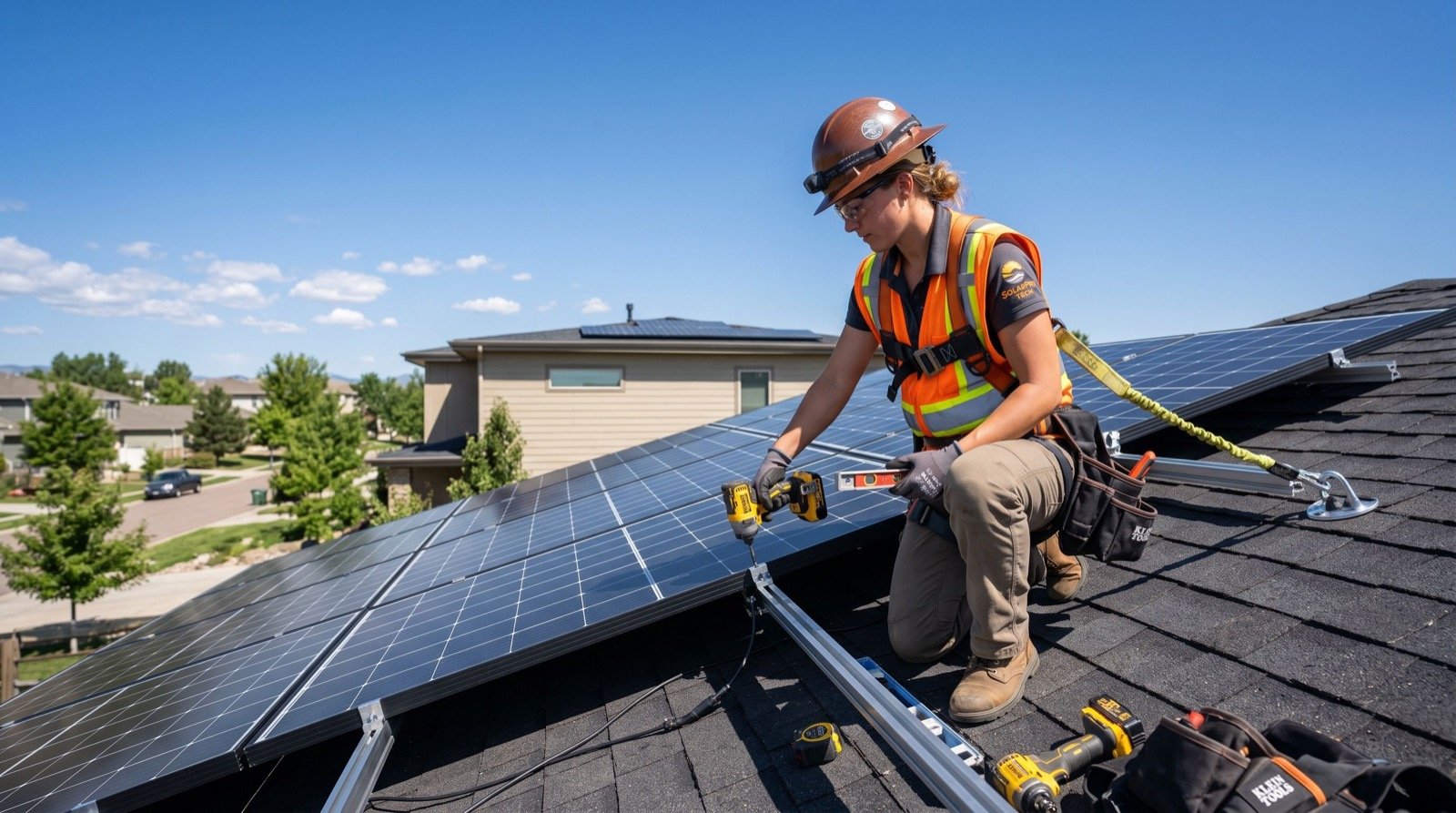
Very little, but not zero. Karachi’s salty, dusty air coats panels quickly, so plan a wash every two to three weeks in dry months. Inspect mounting hardware for corrosion each year, and choose hot-dip galvanised or aluminium structures near the coast.
Monitor production through your inverter app. A sudden fall of 20 percent or more on a clear day usually signals dirt, shading from a new building or a failing string, and it deserves a call to your installer.
Frequently Asked Questions
How long does a solar installation take in Karachi?
A typical residential system takes one to three days for installation once equipment arrives. Net metering approval adds several weeks, depending on the distribution company’s schedule.
Will solar work during monsoon or cloudy weather?
Yes, but at reduced output, often 20 to 50 percent of a sunny day. A hybrid system with batteries or grid support fills the gap.
What is the best time to install solar panels?
Any season works. Installing before summer lets you capture the highest production months and the largest savings.
Are lithium batteries worth the extra cost?
For daily cycling they usually are. They last longer, deliver more usable energy and need almost no maintenance compared with lead-acid units.
Conclusion
Choosing the right solar company in Karachi comes down to proof, transparency and support. Compare itemised quotes, inspect completed work, and size the system around your real consumption rather than a sales target.
Start by gathering your last twelve electricity bills today, then request written proposals from at least three companies. With careful comparison, solar can cut your costs and protect your home from outages for the next two decades.